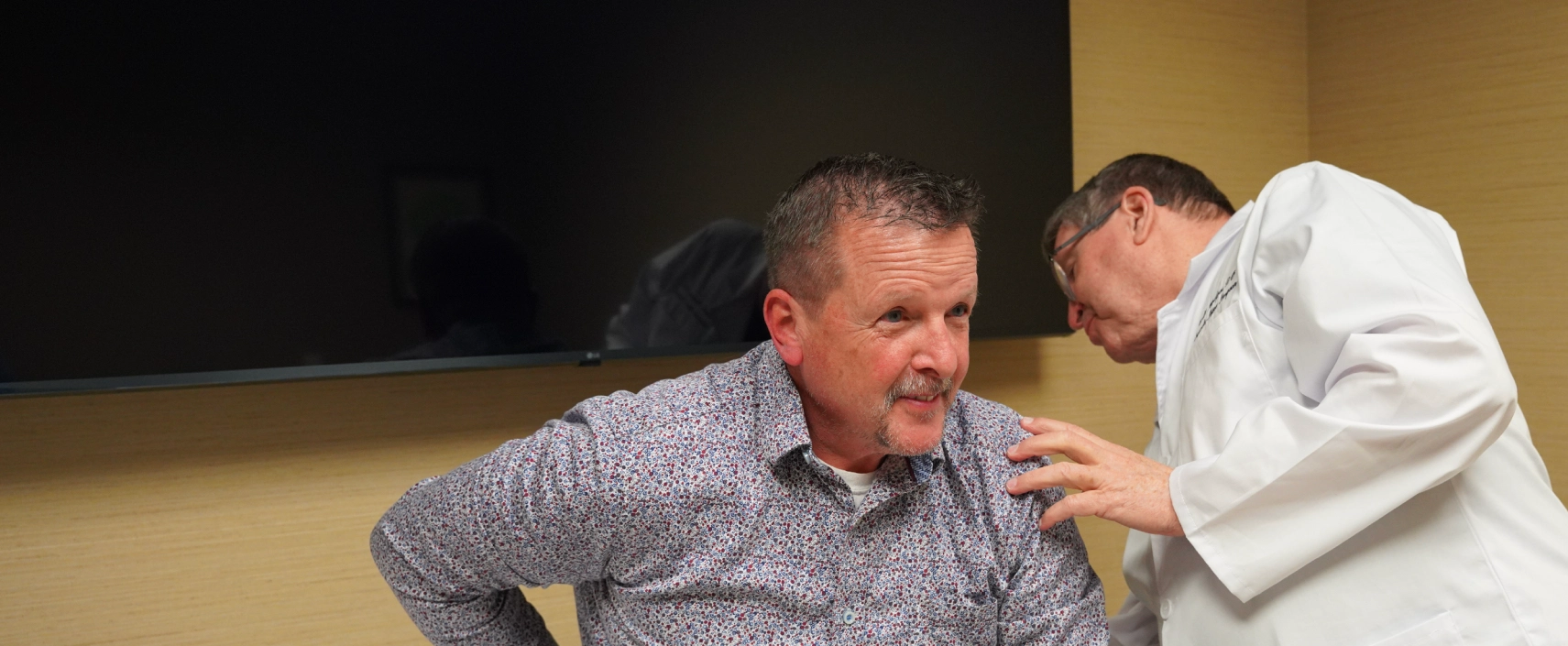
Medically Reviewed & Written By — Spine Motion Specialists

Scott Hodges, DO
Board-Certified Spine Surgeon · Spine Motion Specialists · Chattanooga, TN
Conditions We treat
Sciatica
Understanding your symptoms and exploring motion-preserving sciatica treatment options
Living With
Sciatica
Sciatica can be frustrating and disruptive. That sharp, burning, or electric pain shooting down your leg can make sitting, driving, sleeping, or even walking uncomfortable. For many people, it feels unpredictable and exhausting.
At Spine Motion Specialists, we focus on identifying why your sciatic nerve is irritated and finding motion-preserving solutions, like sciatica treatment that relieves pain while protecting your mobility and long-term function.

What Is It?
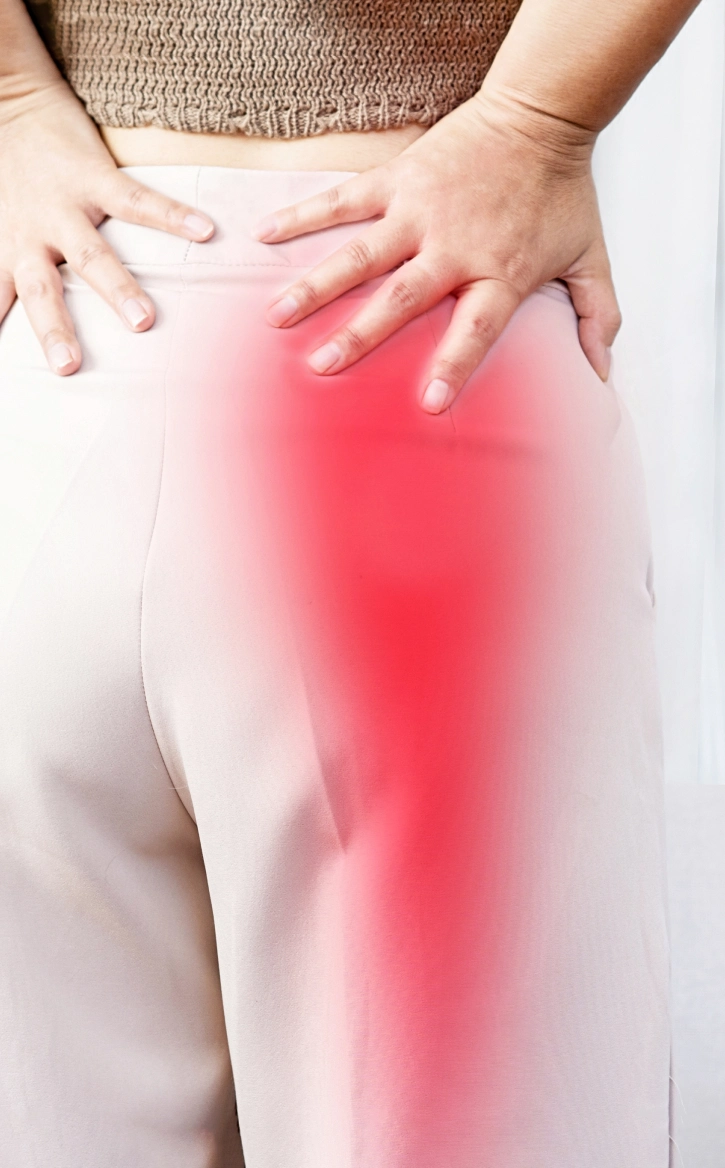
Sciatica is not a condition itself, but a symptom caused by irritation or compression of the sciatic nerve. This large nerve runs from your lower back through your hips, buttocks, and down each leg.
When the nerve is compressed, it can cause pain, numbness, tingling, or weakness along its path most commonly on one side of the body.
What Causes Sciatica?
The most common causes include:
- Herniated or bulging discs
- Spinal stenosis
- Bone spurs
- Degenerative disc disease
- Spondylolisthesis
These conditions can narrow the space around the nerve, creating pressure and inflammation.

Common Symptoms
Symptoms of pinched sciatic nerve may include:
- Sharp, burning, or shooting leg pain
- Pain that starts in the lower back or buttock and travels down the leg
- Numbness or tingling
- Muscle weakness
- Pain that worsens with sitting
How Is It Diagnosed
Diagnosis typically includes:
- Detailed medical history
- Physical and neurological exam
- MRI or CT imaging to identify nerve compression
This allows Dr. Hodges to determine the root cause of your condition, not just treat symptoms.
When to Seek Sciatica Treatment
You should consider evaluation if:
- Pain lasts longer than a few weeks
- Symptoms worsen
- You experience weakness or numbness
- Pain interferes with daily life
Why Spine Motion Specialists?
Your care plan is built around your goals, your movement, and your lifestyle, never a protocol.
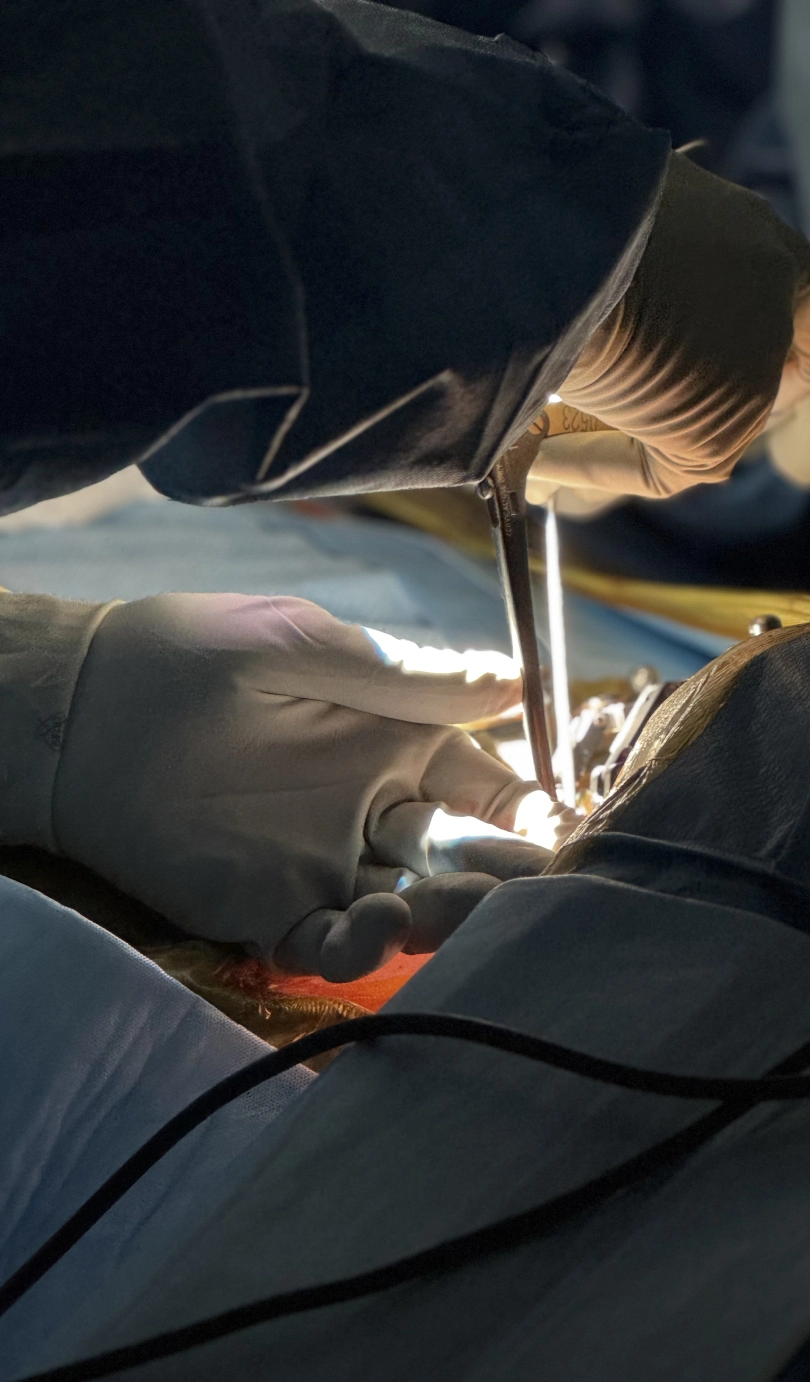
Dr. Scott Hodges brings 35+ years of experience and a deep understanding of spine biomechanics to every patient visit.
Fusion-free philosophy
Motion-preserving expertise
Concierge, one-on-one care
Extended 60–90 minute consults
Virtual visits available for travel patients
Sciatica
Frequently Asked Questions
Can sciatica go away on its own?
Yes. Many cases improve with conservative sciatica treatment options such as physical therapy and activity modification. However, persistent pain should be evaluated.
Is walking good for sciatic nerve pain?
Often, yes. Gentle walking helps reduce stiffness and improve circulation. Dr. Hodges will guide you on safe activity levels.
Will I need surgery?
Most patients don’t. Surgery is only considered if pain persists or nerve function is threatened.
How long does recovery take?
Recovery varies. Some patients improve in weeks, while others take longer depending on the cause and treatment approach.
What if I’ve been told fusion is my only option?
Many patients seek us out after hearing this. In some cases, motion-preserving alternatives may be appropriate. A consultation can help explore your options.
What does sciatic nerve pain feel like?
It often feels like a sharp, burning, or shooting pain that travels from the lower back into the buttock and down the leg. Some people also notice tingling, numbness, or muscle weakness.
Where is pinched sciatic nerve pain usually felt?
The pain is usually felt along the path of the sciatic nerve, which can include the lower back, buttocks, hip, and one leg. The pain may travel below the knee and into the calf or foot.
Start Your Path to Relief
Not sure if sciatica is the cause of your pain?
A consultation can help you get clarity and explore motion-preserving solutions.