

Quick Answer
A failing cervical fusion often shows up as returning neck pain, new arm pain, numbness, tingling, or weakness months to years after surgery. Common causes include pseudarthrosis (the bones not fusing), hardware problems, and adjacent segment disease. Motion-preserving alternatives to more fusion may be available after a thorough evaluation.
Key Takeaways
Returning neck or arm pain after cervical fusion can signal fusion failure and should be evaluated.
Failure can happen early (hardware issues) or years later (adjacent segment disease).
Numbness, tingling, or weakness are nerve-related red flags that need prompt attention.
More fusion is not always the only option. Motion-preserving alternatives may be possible.
An accurate diagnosis from a motion-preservation specialist is the most important first step.
Medically Reviewed by Scott Hodges, DO — Board-Certified Spine Surgeon. View credentials →

Scott Hodges, DO
Reviewed By
Board-Certified Spine Surgeon · Spine Motion Specialists · Chattanooga, TN
Dr. Hodges reviewed this article for clinical accuracy. He is a fellowship-trained spine surgeon specializing in motion-preserving procedures including lumbar disc replacement, cervical disc replacement, and facet replacement. He has treated patients from all across the US and internationally for over 40 years.
What Is a Failed Cervical Fusion?
A failed cervical fusion happens when the surgery does not achieve its goal, or when new problems develop afterward. It can occur in several ways:
- Pseudarthrosis (nonunion): the bones do not fully fuse, leaving the segment unstable.
- Hardware failure: screws, plates, or rods break, loosen, or shift out of position.
- Adjacent segment disease: the levels above or below the fusion degenerate from added stress.
- Persistent symptoms: pain, numbness, or weakness continues or returns despite the fusion.
A failed fusion does not mean you did anything wrong. Sometimes the body simply does not heal as expected, or biomechanical changes create new problems over time.
What Does a Failed Fusion Feel Like?
Symptoms vary by cause, but patients most often describe returning neck pain, radiating arm pain, numbness or tingling, weakness, or new stiffness.
Returning Neck Pain
If neck pain returns months or years after fusion, especially if it feels like your pre-surgery pain, this can indicate fusion failure.
Radiating Arm Pain
New or returning arm pain is one of the most common signs, often indicating nerve compression from hardware issues, pseudarthrosis, or adjacent segment degeneration.
Spinal Conditions We Specialize In
- Degenerative Disc Disease (DDD)
- Herniated Disc
- Spinal Stenosis
- Spondylolisthesis
- Sciatica
- Kyphosis
- Scoliosis
- Facet Arthritis
- Annular Tear
- Radiculopathy
- Failed Back Surgery Syndrome (FBSS)
Not sure what’s causing your symptoms?
What Causes Cervical Fusion to Fail
Fusion failure usually stems from biological, surgical, or mechanical factors, and sometimes a combination.
- Biological: smoking, osteoporosis, diabetes, nutritional deficiencies, age.
- Mechanical: excessive stress on the fusion, adjacent segment degeneration, hardware fatigue.
How Failed Cervical Fusion Is Diagnosed
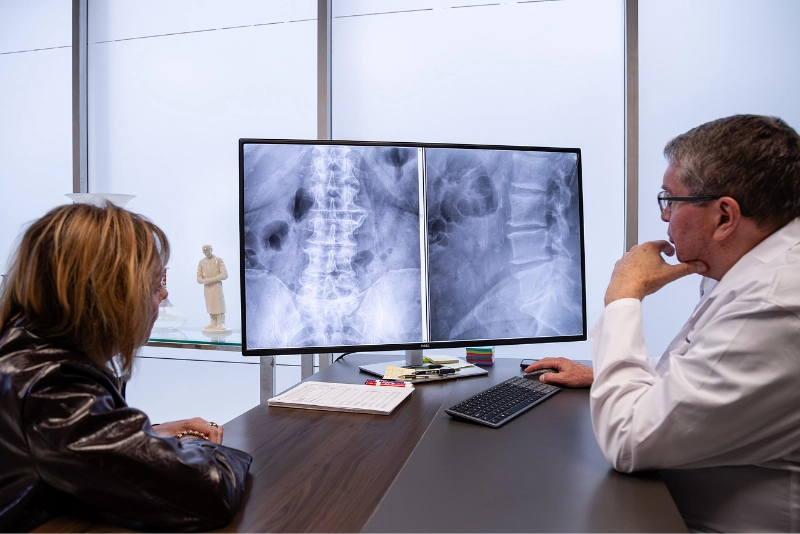
Diagnosis combines an extended consultation, a detailed neurological exam, and advanced imaging including flexion-extension X-rays, CT, and MRI.
At Spine Motion Specialists, Dr. Hodges provides 1:1 extended consultations to understand your symptoms and how pain affects your life, then uses imaging to pinpoint whether you have pseudarthrosis, adjacent segment disease, or hardware failure.
What If I’ve Been Told More Fusion Is My Only Option?
More fusion is not always the only path. Depending on your anatomy, motion-preserving options like cervical disc replacement or fusion reversal may be possible.
Long-term clinical trials show cervical disc replacement can preserve motion while delivering outcomes comparable to or better than fusion over 7 to 10 years.1,2 The key is a thorough evaluation by a surgeon who specializes in motion preservation and understands all available options, not just fusion.
Why Patients Choose Spine Motion Specialists
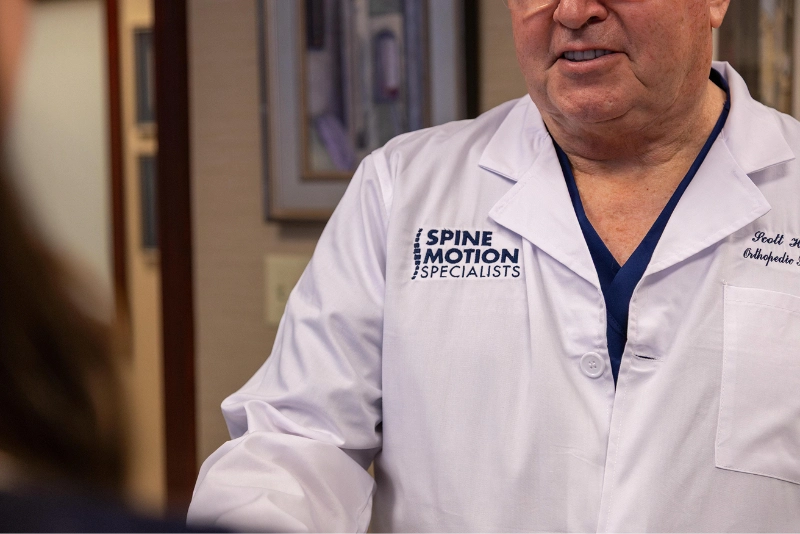
A surgeon who stopped performing fusion
Dr. Hodges dedicated his practice entirely to motion preserving, non-fusion spine care.
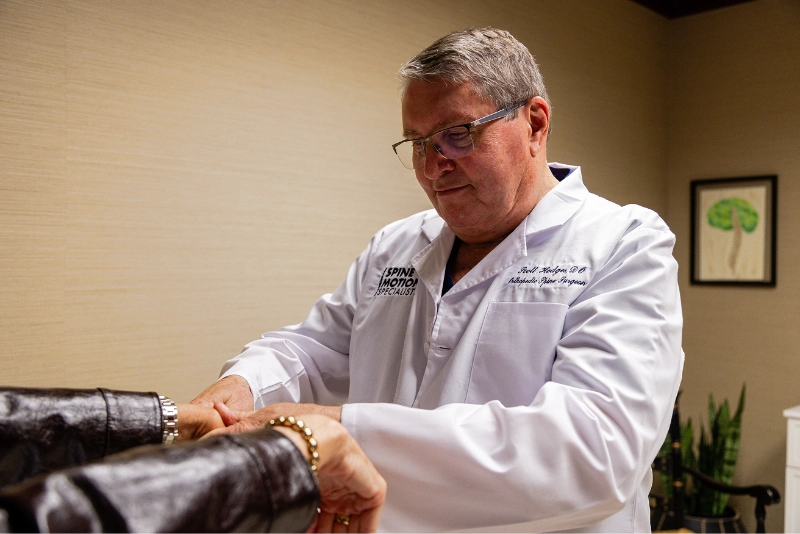
Concierge, one-on-one care
Direct access to Dr. Hodges from your first consultation through full recovery.
40+ years and published research
Decades of experience and peer-reviewed contributions to spine care.

A genuine second opinion
If you’ve been told fusion is your only option, you deserve to know your alternatives.
A surgeon who stopped performing fusion
Dr. Hodges dedicated his practice entirely to motion preserving, non-fusion spine care.
Concierge, one-on-one care
Direct access to Dr. Hodges from your first consultation through full recovery.
40+ years and published research
Decades of experience and peer-reviewed contributions to spine care.
A genuine second opinion
If you’ve been told fusion is your only option, you deserve to know your alternatives.


40+
YEARS EXPERIENCE
39
PEER-REVIEWED PAPERS
★ 4.9
WEBMD REVIEWS
Individual results vary. Testimonials reflect individual experiences and are not a guarantee of outcome.
Frequently Asked Questions
Can a cervical fusion fail years after surgery?
Yes. Some patients experience no problems for several years before adjacent segment disease, hardware fatigue, or progressive degeneration causes symptoms to appear.
Is more fusion the only fix for a failed fusion?
Not always. Depending on your anatomy, motion-preserving options like cervical disc replacement or fusion reversal may be possible. A specialist evaluation determines your options.
How is a failed cervical fusion diagnosed?
Through an extended consultation, a detailed neurological exam, and advanced imaging including flexion extension X-rays, CT, and MRI.
Get Answers About Your Failed Fusion
Submit your information and a spine motion specialist will contact you within 24 to 48 hours.
PREFER TO CALL?
(423) 904-5560
Mon–Fri, 8am–5pm ET
“Dr. Hodges gave me a real alternative when I was told fusion was my only option.”
Sources
- Gornet MF, McConnell JR, Riew KD, Lanman TH, Burkus JK, Hodges SD, et al. Treatment of Cervical Myelopathy: Long-term Outcomes of Arthroplasty for Myelopathy Versus Radiculopathy, and Arthroplasty Versus Arthrodesis for Myelopathy. Clin Spine Surg. 2018;31(10):420-427. DOI: 10.1097/BSD.0000000000000744
- Gornet MF, Lanman TH, Burkus JK, Hodges SD, et al. One-Level Versus 2-Level Treatment With Cervical Disc Arthroplasty or Fusion: Outcomes Up to 7 Years. Int J Spine Surg. 2019;13(6):551-560. PMID: 31970051
This page is for educational purposes only and does not constitute medical advice. Always consult a qualified healthcare provider for diagnosis and treatment recommendations specific to your condition.