Motion-Preserving Spine Treatments
Lumbar Disc Replacement
Relieve low back pain while preserving natural movement
Living With
Low back pain doesn’t have to mean giving up your lifestyle
Persistent low back pain can quietly take control of your life. Sitting, standing, exercising, traveling, or even sleeping may feel uncomfortable or exhausting. Many patients worry that surgery automatically means spinal fusion and permanent loss of movement.
At Spine Motion Specialists, we approach care differently. Our philosophy is simple: your spine is meant to move. When surgery is needed, we focus on motion-preserving solutions that relieve pain while protecting your long-term mobility, strength, and quality of life.

What is lumbar disc replacement and how does it work?
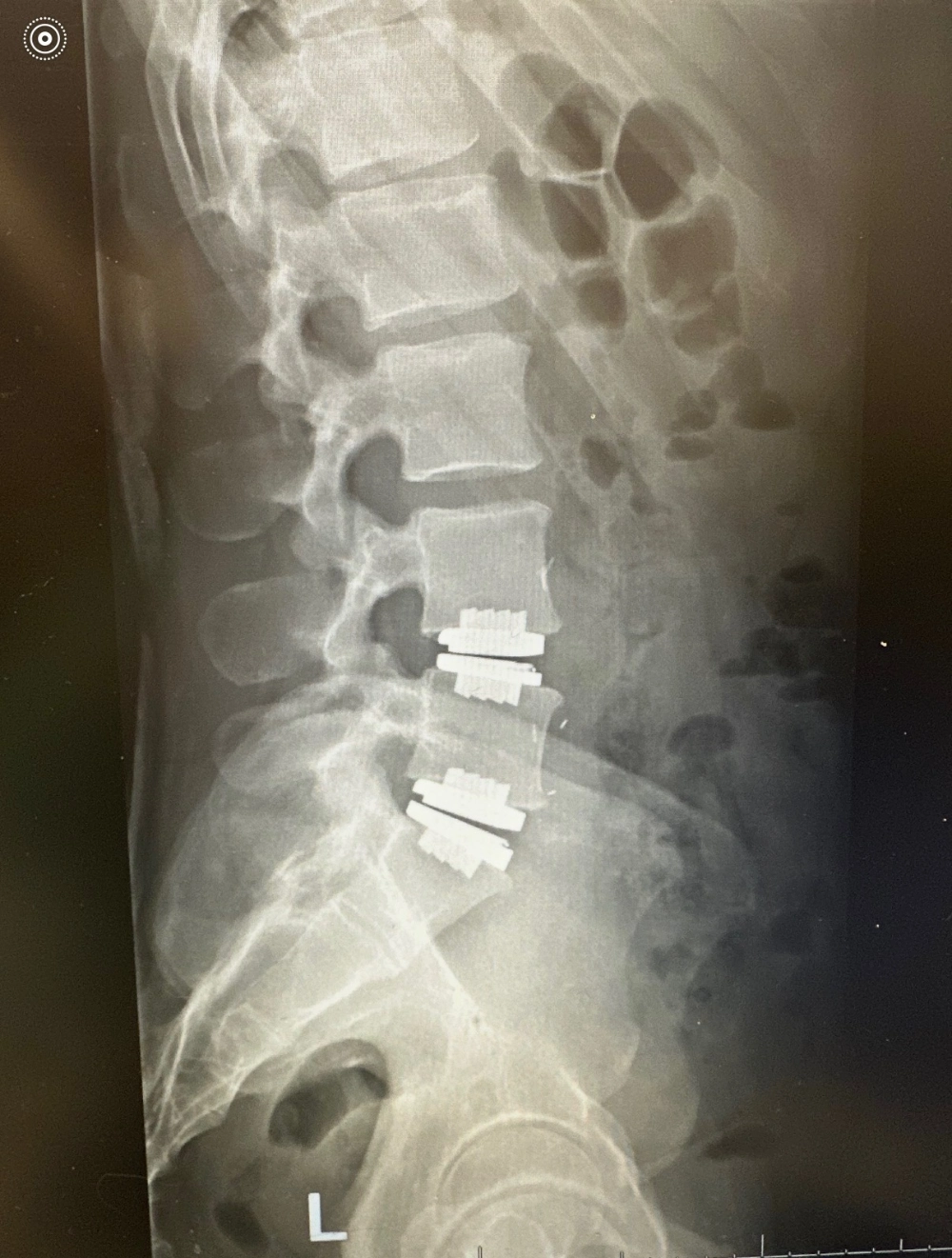
Lumbar disc replacement is a motion-preserving surgical procedure used to treat painful, damaged discs in the lower back. Instead of removing the disc and fusing the vertebrae together, the damanged disc is replaced with an artificial disc implant designed to mimic the natural movement and cushioning of a healthy disc.
This artificial disc restores normal disc height, relieves pressure on nearby nerves, and allows the spine to continue bending, rotating, and absorbing impact naturally. Unlike fusion, which permanently locks two bones together, lumbar disc replacement maintains motion and helps reduce stress on surrounding spinal levels.
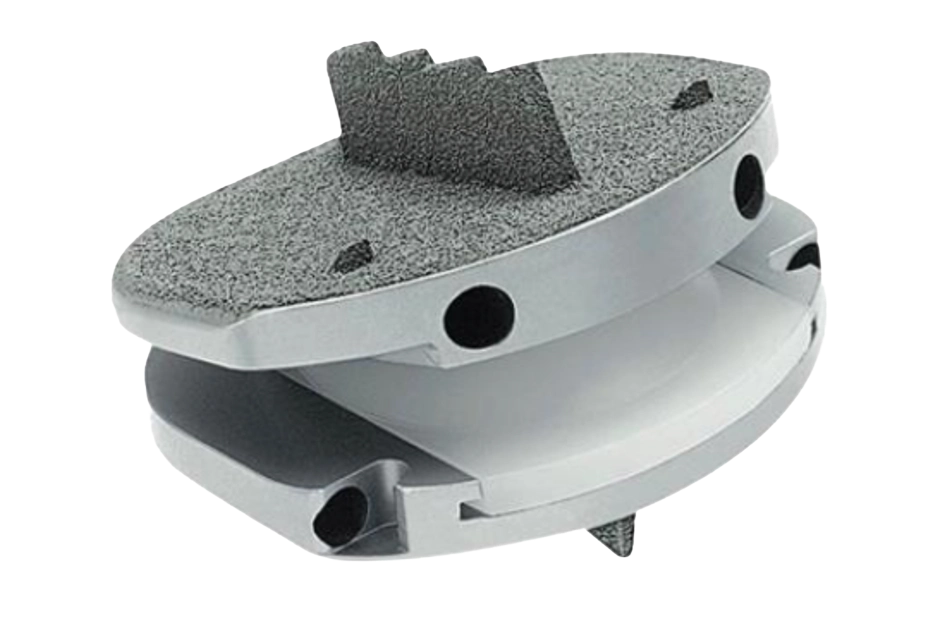
Several FDA-approved and investigational disc designs are available today, each engineered to support stability while preserving movement. Dr. Hodges carefully selects the most appropriate implant based on your anatomy, lifestyle, and long-term goals.

Who is a
Good Candidate
Lumbar disc replacement may be an option for patients who:
- Have chronic low back pain caused by single- or two-level degenerative disc disease
- Have not found relief with physical therapy, medications, injections other conservative care options
- Have pain primarily coming from one or two discs
- Have healthy facet joints
- Maintain stable spinal alignment
- Want to preserve mobility and avoid fusion
Dr. Hodges performs a thorough evaluation using advanced imaging and motion analysis to determine whether lumbar disc replacement is appropriate for you.
Every recommendation is personalized to your anatomy, lifestyle, and goals.
What Happens
During The Procedure
Lumbar disc replacement is typically performed through a small incision in the lower abdomen, allowing safe access to the front of the spine while minimizing disruption to back muscles. Usually a vascular surgeon, often referred to as an access surgeon, is required to complete this procedure, since the anterior approach for ADR involves maneuvering around major vessels in the abdomen to complete surgery.
During the procedure:
- The damaged disc is carefully removed
- The space is prepared to restore proper height and alignment
- An artificial disc implant is precisely positioned using advanced imaging
- Natural motion is restored at the treated level
This minimally invasive approach helps preserve surrounding tissues and spinal structures. Many patients experience less postoperative pain, smaller scars, and faster recovery compared to traditional open surgery.
The procedure is designed to relieve nerve compression while maintaining the natural biomechanics of the lower back.
What are the benefits
Lumbar disc replacement offers several advantages over traditional fusion surgery:
Preserves natural motion
Your lower back continues to move normally, helping you stay active and flexible.
Reduces stress on nearby levels
Maintaining motion may lower the risk of adjacent segment degeneration.
Faster recovery
Many patients return to daily activities sooner compared to fusion.
Less stiffness after surgery
Preserving movement helps prevent long-term rigidity.
Long-term spine protection
By restoring biomechanics, disc replacement supports healthier spinal function over time.
For many patients, this means
Lasting pain relief without sacrificing mobility.
What does recovery look like?
Recovery varies based on your health and activity level, but most patients experience a faster recovery than traditional fusion surgery.
Hospital stay
Most patients go home the same day or after an overnight stay.
Return to work
Light or desk work may be possible within 2–4 weeks. Physically demanding jobs may require additional recovery time.
Physical therapy
Targeted rehabilitation often begins after surgery to restore strength, stability, and confidence in movement.
Dr. Hodges will guide you through each phase of recovery with a personalized plan.
Why Spine Motion Specialists?
Your care plan is built around your goals, your movement, and your lifestyle, never a protocol.
Dr. Scott Hodges brings 35+ years of experience and a deep understanding of spine biomechanics to every patient visit.
Fusion-free philosophy
Motion-preserving expertise
Concierge, one-on-one care
Extended 60–90 minute consults
Virtual visits available for travel patients
Lumbar Disc Replacement
Frequently Asked Questions
Is lumbar disc replacement better than fusion?
For many patients, yes. Lumbar disc replacement is designed to preserve natural movement at the treated level, while fusion permanently locks two vertebrae together. By maintaining motion, disc replacement may help reduce stress on nearby spinal levels, which can sometimes lead to degeneration over time after fusion.
That said, disc replacement is not appropriate for everyone. Factors such as facet joint health, spinal alignment, bone quality, and the specific cause of your pain all play an important role. Dr. Hodges carefully evaluates your imaging, symptoms, and goals to determine which option is safest and most effective for you.
Can more than one disc be replaced?
Yes, some patients may be candidates for multi-level lumbar disc replacement. Eligibility depends on several factors including:
- The number of damaged discs
• Overall spinal alignment
• Health of the facet joints
• Bone density
Dr. Hodges performs a thorough evaluation to determine whether treating more than one level is appropriate and safe in your specific case.
What if I have been told fusion is my only option?
This is something we hear from many patients. For years, fusion was the most commonly recommended surgical treatment for chronic low back pain caused by disc degeneration. However, advances in motion preserving technology have created new alternatives for select patients.
Dr. Hodges specializes in motion preserving surgery and carefully evaluates each case to see if lumbar disc replacement may be an option. While fusion may still be necessary in certain situations, many patients are surprised to learn they may have fusion-free alternatives that protect mobility and long term function.
A second opinion can help you fully understand your options and make a confident decision about your care.
What is the success rate of lumbar disc replacement?
Success rates for lumbar disc replacement are generally strong when patients are carefully selected and the procedure is performed for the appropriate diagnosis. While outcomes can vary by study and how “success” is defined, data shows patients typically report 75% to 93% patient satisfaction.
Many patients experience meaningful improvement in back and leg pain, function, and overall quality of life. Because lumbar disc replacement preserves motion at the treated level, it is designed to support more natural spinal mechanics and may help reduce stress on surrounding segments compared to fusion.
Outcomes are typically best in patients who are good candidates for the procedure, with success influenced by factors such as the specific diagnosis, the number of levels treated, bone quality, spinal alignment, and overall spine health. A thorough evaluation helps determine whether lumbar disc replacement is the most appropriate option for achieving lasting relief and maintaining long-term mobility.
Take the next step
Not sure if lumbar disc replacement is right for you?
A consultation can help you understand your options and make a confident decision.