Motion-Preserving Spine Treatments
Microdiscectomy
Relieve nerve pain while preserving natural movement
Living With
Leg or arm pain does not have to control your life
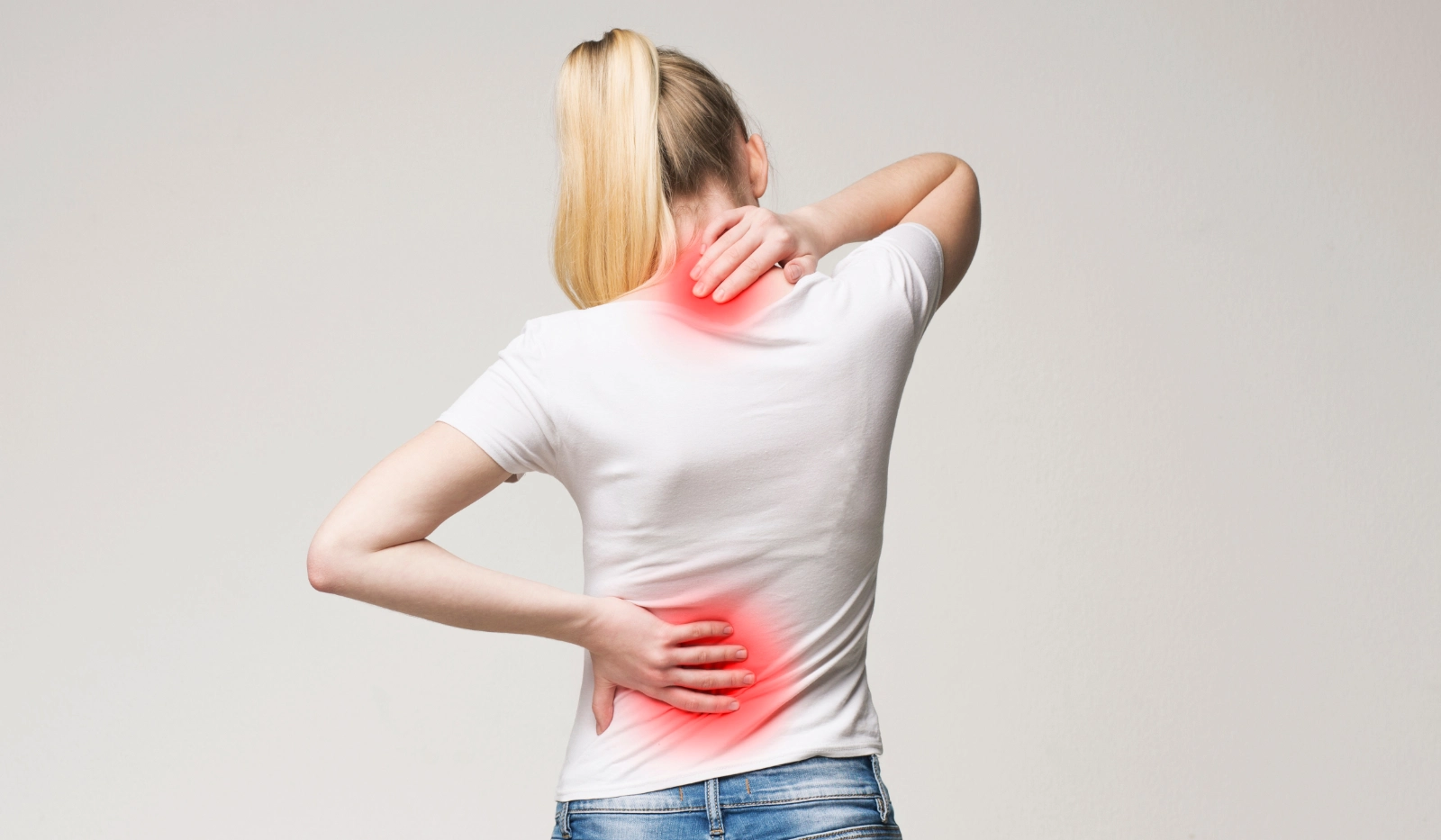
Sharp, shooting pain down your leg or arm can make everyday activities feel overwhelming. Sitting, driving, sleeping, or even walking may trigger burning or electric pain. Many patients feel frustrated when conservative treatments do not bring lasting relief.
At Spine Motion Specialists, we believe your spine is meant to move. When surgery is necessary, we focus on targeted, motion preserving solutions that relieve nerve pressure while protecting your long term mobility and function.
What is it?
A microdiscectomy is a minimally invasive surgical procedure used to remove the portion of a herniated disc that is pressing on a spinal nerve. Only the damaged disc fragment is removed, while the healthy portion of the disc remains intact.
By relieving pressure on the nerve, this procedure is designed to reduce leg or arm pain, numbness, and tingling. Because the disc and surrounding structures are largely preserved, microdiscectomy allows the spine to maintain its natural movement and stability.
This procedure is commonly used to treat conditions such as sciatica and radiculopathy caused by disc herniation.
Who is a
Good Candidate
Microdiscectomy may be an option for patients who:
- Have a confirmed disc herniation on imaging
- Experience persistent leg or arm pain
- Have numbness, tingling, or weakness
- Have not improved with physical therapy or injections
- Have symptoms that interfere with daily life
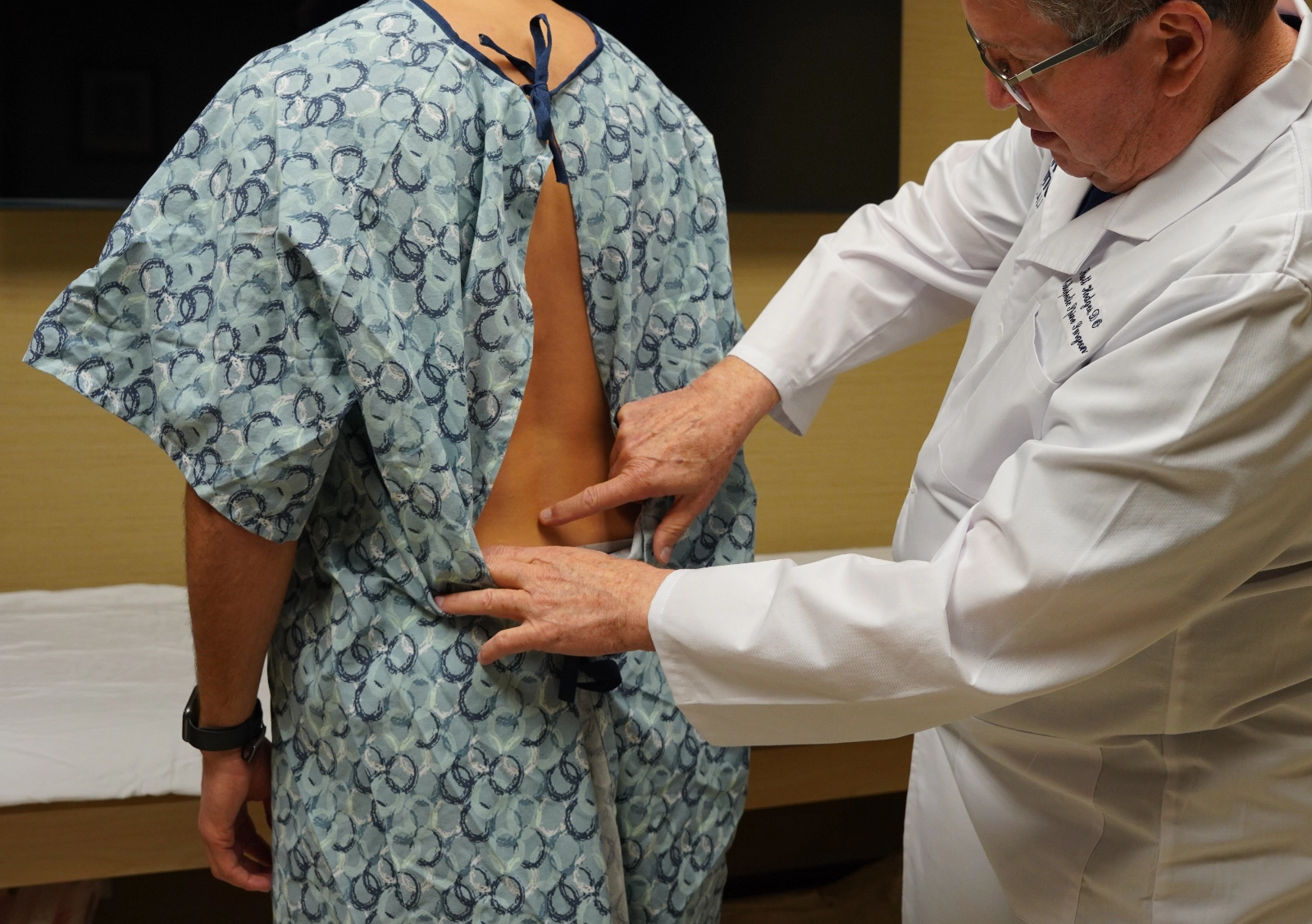
Dr. Hodges performs a thorough evaluation using imaging and physical examination to determine whether microdiscectomy is appropriate for your condition.
What Happens
During The Procedure
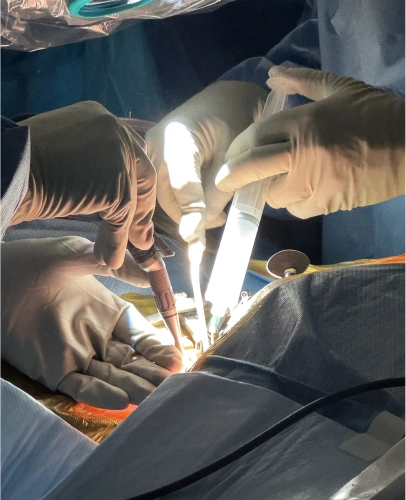
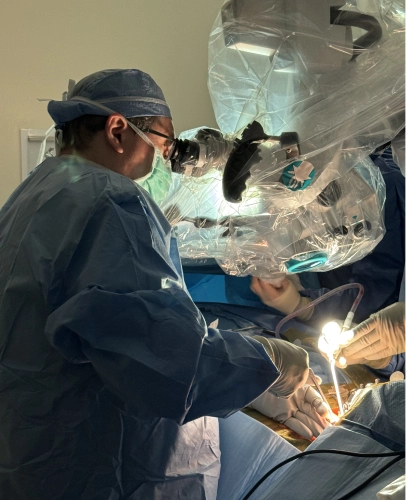
During a microdiscectomy, the surgeon makes a small incision in the lower back to access the affected vertebral level. Using an operating microscope for enhanced precision, a small amount of bone and ligament may be gently removed to reach the herniated disc material. The compressed nerve is carefully decompressed by removing the offending disc fragment while leaving the rest of the disc intact. This minimally invasive approach minimizes muscle disruption, blood loss, and postoperative pain, allowing for faster recovery and reduced hospital stays.
What are the benefits
Microdiscectomy offers several potential benefits:
Targeted nerve relief
Only the disc fragment causing compression is removed.
Motion preserving
The disc and spinal structures are preserved.
Minimally invasive approach
Smaller incision and less tissue disruption.
Faster recovery
Many patients return to normal activities sooner.
High success rates
Many patients experience significant symptom relief.
For many patients, this means
Lasting pain relief without sacrificing mobility.
What does recovery look like?
Recovery varies by individual but often follows a predictable course.
Hospital stay
Most patients go home the same day.
Return to work
Light work may be possible within one to two weeks.
Physical therapy
Therapy may be recommended to restore strength and mobility.
Dr. Hodges will guide you through each phase of recovery with a personalized plan.
Why Spine Motion Specialists?
Your care plan is built around your goals, your movement, and your lifestyle, never a protocol.
Dr. Scott Hodges brings 35+ years of experience and a deep understanding of spine biomechanics to every patient visit.
Fusion-free philosophy
Motion-preserving expertise
Concierge, one-on-one care
Extended 60–90 minute consults
Virtual visits available for travel patients
Microdiscectomy
Frequently Asked Questions
How is microdiscectomy different from traditional spine surgery?
Microdiscectomy uses a minimally invasive approach with a much smaller incision compared to traditional open surgery. Specialized instruments and magnification allow Dr. Hodges to precisely remove only the portion of the disc pressing on the nerve.
Because surrounding muscles and tissues are preserved as much as possible, patients often experience less postoperative pain, smaller scars, and a faster recovery. Traditional open surgery typically involves more muscle disruption and longer healing time.
Will the disc herniate again?
While most patients experience long lasting relief, a disc can reherniate in some cases. This risk is generally low, but it can depend on factors such as disc health, activity level, and overall spine condition.
Dr. Hodges will discuss prevention strategies including proper body mechanics, core strengthening, and safe activity progression to help protect your spine long term.
How soon will my leg or arm pain improve?
Many patients notice improvement in nerve pain immediately or within days after surgery, since the pressure on the nerve has been relieved. However, healing timelines vary.
If a nerve has been compressed for a long time, it may take weeks or months to fully recover. Dr. Hodges will monitor your progress and guide you through recovery to ensure optimal healing.
Will I need physical therapy after surgery?
Physical therapy is often recommended to help restore strength, flexibility, and confidence in movement. Therapy focuses on:
- Core strengthening
- Posture improvement
- Safe movement patterns
- Injury prevention
Dr. Hodges will determine the right therapy plan based on your individual recovery and lifestyle goals.
What if I have been told fusion is my only option?
This is something we hear often. Many patients are told fusion is their only option even when less invasive, motion preserving procedures may still be appropriate.
At Spine Motion Specialists, Dr. Hodges carefully evaluates each case to explore every possible alternative before recommending fusion. A second opinion can help determine if microdiscectomy or another motion preserving option may be right for you.
How long will the results last?
For many patients, relief is long lasting. By removing the source of nerve compression and preserving the disc structure, microdiscectomy is designed to provide durable symptom relief.
Maintaining a healthy lifestyle, staying active, and following your recovery plan can help protect your long term spine health.
Take the next step
Not sure if microdiscectomy is right for you?
A consultation can help you understand your options and make a confident decision.